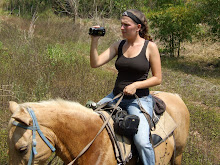
hmmm. So when I first heard that we couldn't use any type of camera, I have to admit I kind of freaked out. However, after talking it through in class, I feel a little better about it. I wish I had a better still camera because I would love to do some stop animation for this project. I may still try it with the camera I have, or maybe I'll be able to borrow one from someone else. I definitely want to use animation for at least part of it, if not most of it. I'm just learning animation now in the Modes of Animation class (as you know, Andre) and its exciting that I have a chance to apply what I've learned to another class already. I like how hand drawn animation looks, and I wanted to use my new photoshop tablet for it, but since the tablet just broke my computer, I'm not sure how well that is going to work out. I also think using my camera phone might look kind of cool because my camera has pretty crappy picture quality, which I think could actually add a cool dynamic to parts of my project. Another option I have is my webcam on my mac, but that might seem too boring. I don't think I want to use any film strip techniques (scratching, rayogram etc) because quite frankly, I'm sick of cameraless filmmaking, and I just need a break. I like having those techniques now, but I just need a break from them.
I really like that we have a time limit of 48 hours. Normally, I never sign up for those contests because I always just have too much other stuff going on (school stuff especially) and I just don't have time. Also, those contests are often times in groups, and all of my film friends have just as much work to do as I do. Therefore, I think its really awesome that I am being forced to do this for a class. I've always wanted the experience of it, and so its really cool that its being incorporated into the work that I already have to do anyhow. Im also glad that I can do it alone, because sometimes it gets tiring having to always coordinate with group members, and when we only have 48 hours, luck really has to be on your side for a group to coordinate in only 2 days. I hope to make my project into a somewhat narrative story, but I don't feel that it needs to be completely logical. I think it will be a really fun experience and I'm looking forward to doing it!
Thursday, March 4, 2010

Thursday, February 25, 2010
Scratch Film Junkies response 2
I liked this one SO much more than the film we watched on the first day. I'm not sure if this is because I now understand the process of cameraless filmmaking better, or just because this film appealed to me more. It's probably a little of both. I loved the textures that were created in the film, and I wish I had done whatever they had done for my project! I liked how the white and black lines and patterns acted as a connecting theme throughout.
I thought the music choice was awesome. It really enhanced the rhythm that was already in place by the images. The music was really catchy and made the images appear to be almost dancing. I liked the rhythm a lot more than the first Scratch Film Junkies film we saw because the patterns stayed on the screen a little bit longer, which gave me much less of a headache than when patterns only cover like five frames at a time and it all flies by way too fast. The colors incorporated were so rich and exciting, and they added their own energy to the film.
The live action was incorporated better in this film than the last. Again, I'm not sure if it just caught me off guard on the first day of class because this was an entirely new medium for me and I wasn't expecting to see live action in a totally experimental film, or if I just liked the way it fit in with this film better. I thought the kid holding the video camera was really cool. It had a slightly reflexive feel to it, ironically calling attention to the process of camera filmmaking in the middle of a cameraless film. It seemed to show that there are many different aspects of filmmaking that can be incorporated into any type of film, regardless of a film's given label.
Watching this film right after finishing my own cameraless film project made me realize how difficult this form of filmmaking is. I never thought "well its just scribbling on a film, its so easy," but at the same time, I never expected it to be so difficult to make a film look really good. Its not hard to make a film this way, but it is very hard to make it beautiful, moving, or powerful, which is a similarity with camera filmmaking that I did not anticipate, or even consider before this project.
I thought the music choice was awesome. It really enhanced the rhythm that was already in place by the images. The music was really catchy and made the images appear to be almost dancing. I liked the rhythm a lot more than the first Scratch Film Junkies film we saw because the patterns stayed on the screen a little bit longer, which gave me much less of a headache than when patterns only cover like five frames at a time and it all flies by way too fast. The colors incorporated were so rich and exciting, and they added their own energy to the film.
The live action was incorporated better in this film than the last. Again, I'm not sure if it just caught me off guard on the first day of class because this was an entirely new medium for me and I wasn't expecting to see live action in a totally experimental film, or if I just liked the way it fit in with this film better. I thought the kid holding the video camera was really cool. It had a slightly reflexive feel to it, ironically calling attention to the process of camera filmmaking in the middle of a cameraless film. It seemed to show that there are many different aspects of filmmaking that can be incorporated into any type of film, regardless of a film's given label.
Watching this film right after finishing my own cameraless film project made me realize how difficult this form of filmmaking is. I never thought "well its just scribbling on a film, its so easy," but at the same time, I never expected it to be so difficult to make a film look really good. Its not hard to make a film this way, but it is very hard to make it beautiful, moving, or powerful, which is a similarity with camera filmmaking that I did not anticipate, or even consider before this project.
Wednesday, February 17, 2010
Chion Reading Response
I liked this article. While some of the things that were discussed seemed kind of like ..duhh.. to me, other points were things that i've never considered before, or technical things i didn't even know. I felt that I could definitely relate to the feeling of playing a film without sound. As an editor, I enjoy placing all the visuals together before I start with the soundtrack, but no matter how much I like the visual sequences that I create, there is nothing more satisfying than adding the "explosion" sound effect, or the perfect tune that you have been impatiently waiting to add throughout the entire visual cut. I don't think that this means the images are worthless without sound, but even in the silent era, there has always been a need for sound to accompany a film.
I thought the difference that was brought up between empathetic and anempathetic music was very interesting. Everyone can recognize how much empathetic sound/music can have an effect on the audiences emotional response to whatever is happening in the film, but I never considered sounds such as the shower continuing to run in Psycho as its own category, with its own effect on my response as well.
The technical differences between the recognition of seeing and hearing was pretty cool, but I don't think I'd ever use that to make short cuts in a film as the article claims was done in Star Wars. That just seems like a stupid thing to do, since they already had the footage they needed to actually show the door open. However, I did agree with the three ways that sound can temporalize an image, and I find it to be a very useful and successful technique in film.
I thought the difference that was brought up between empathetic and anempathetic music was very interesting. Everyone can recognize how much empathetic sound/music can have an effect on the audiences emotional response to whatever is happening in the film, but I never considered sounds such as the shower continuing to run in Psycho as its own category, with its own effect on my response as well.
The technical differences between the recognition of seeing and hearing was pretty cool, but I don't think I'd ever use that to make short cuts in a film as the article claims was done in Star Wars. That just seems like a stupid thing to do, since they already had the footage they needed to actually show the door open. However, I did agree with the three ways that sound can temporalize an image, and I find it to be a very useful and successful technique in film.
Wednesday, February 10, 2010
Theory of Animation Response
I thought this reading was pretty interesting. I've never thought of animation with the same categorical breakups as live action. I always thought of film genres as narrative, doc, animation and experimental. This reading really brings forward the idea that animation has most of those categories all by itself.
I also thought the criteria for defining "orthodox" vs. "nonorthodox" animation was interesting as well. This made me realize how similar the animation that I grew up watching was to the live action film that I watch now. They both had characters that had defining traits, personalities, and voices. Both had linear plots with a beginning, middle, and end, and followed the classical hollywood style in which editing is made to be invisible.
One difference that is strange to me is that with big directors in live action films, the style and artistry of the director is generally intended to be known, regardless of what company they are working under. For example, Hitchcock has many stylistic choices that define his own artistry as a director, whereas Wells argues that with major animation, the individual artistry of a Disney artist or Warner Bros artist is meant to be hidden under the encapsulating style of Disney as a company.
One thing that I didn't like about the article was that to me, it seemed that Wells was implying that orthodox animation is "worse", for lack of a better word, than unorthodox. I thought it was strange that he seemed to be comparing the quality and artistry between the two areas. To me, neither is better or worse, they are just different ways of animating, and both fulfill different needs of different animators.
I also thought the criteria for defining "orthodox" vs. "nonorthodox" animation was interesting as well. This made me realize how similar the animation that I grew up watching was to the live action film that I watch now. They both had characters that had defining traits, personalities, and voices. Both had linear plots with a beginning, middle, and end, and followed the classical hollywood style in which editing is made to be invisible.
One difference that is strange to me is that with big directors in live action films, the style and artistry of the director is generally intended to be known, regardless of what company they are working under. For example, Hitchcock has many stylistic choices that define his own artistry as a director, whereas Wells argues that with major animation, the individual artistry of a Disney artist or Warner Bros artist is meant to be hidden under the encapsulating style of Disney as a company.
One thing that I didn't like about the article was that to me, it seemed that Wells was implying that orthodox animation is "worse", for lack of a better word, than unorthodox. I thought it was strange that he seemed to be comparing the quality and artistry between the two areas. To me, neither is better or worse, they are just different ways of animating, and both fulfill different needs of different animators.
Saturday, February 6, 2010
Cameraless Filmmaking
As a non-experimental filmmaker, this assignment was very much an introduction to many things for me. At first, this project seemed extremely overwhelming, multifaceted, and very confusing. There were so many different aspects to the project that by nature were left ambiguous that does allow for a lot of creative freedom, but at the same time the lack of structure was rather scary for me. However, after last class when I was able to sit in the classroom and have an uninterrupted block of work time, I now feel much better about the project. Now that there has been more discussion about the project, I understand what I need to do better and it seems much more feasible now.
I really enjoyed making the 100 frame animation. I liked having a clear goal of what I wanted from the first frame to the last frame. It was nice to take a break from everything and be able to sit for a couple of hours and draw, paint, and listen to music. I am looking forward to using the darkroom next class, as well as trying other techniques on the film stock.
Overall, I have gotten over my initial reaction of chaos and confusion and I am now really enjoying the project and looking forward to seeing the final product.
I really enjoyed making the 100 frame animation. I liked having a clear goal of what I wanted from the first frame to the last frame. It was nice to take a break from everything and be able to sit for a couple of hours and draw, paint, and listen to music. I am looking forward to using the darkroom next class, as well as trying other techniques on the film stock.
Overall, I have gotten over my initial reaction of chaos and confusion and I am now really enjoying the project and looking forward to seeing the final product.
Saturday, January 30, 2010
Synesthesia Response
I found this reading to be kind of difficult to comprehend. I did find it interesting to read about medical studies that show possible connections between neurological synesthesia and historical artists. This is a type of art and inspiration that I have never considered before, and it was interesting to read the stories of the artists' experiences.
There were some examples that I felt like I could someone understand, but some of them seemed a little too abstract for me. The story behind the Vision piece was something I could imagine happening, because we all see shapes and colors when our eyes are closed, and maybe the experience is different during a process such as acupuncture. The piece titled Vivaldi however, was way beyond anything I can imagine being plausible. I cannot imagine listening to an orchestra or any music for that matter, and coming up with a painting like that. I cannot imagine certain notes feeling like certain colors or a particular pattern to be painted. It is kind of neat to read about people that do have these unordinary experiences, especially when this connection has been studied and has intrigued artists for hundreds of years.
There were some examples that I felt like I could someone understand, but some of them seemed a little too abstract for me. The story behind the Vision piece was something I could imagine happening, because we all see shapes and colors when our eyes are closed, and maybe the experience is different during a process such as acupuncture. The piece titled Vivaldi however, was way beyond anything I can imagine being plausible. I cannot imagine listening to an orchestra or any music for that matter, and coming up with a painting like that. I cannot imagine certain notes feeling like certain colors or a particular pattern to be painted. It is kind of neat to read about people that do have these unordinary experiences, especially when this connection has been studied and has intrigued artists for hundreds of years.
Thursday, January 14, 2010
To The Beat response
I thought this film by the Scratch Film Junkies was pretty cool. I specifically liked the patterns and colors schemes that were used throughout. I thought that the live footage mixed in was better in some places than others, specifically the shots in the beginning were really cool with the live action intertwined. The shots mixed in at the end however I thought were less impressive, maybe because they seemed too random and abstract for me to appreciate. While the title was indicative of the use of sound, I was nevertheless happy with how the music and the images were linked; beating together in some places, while existing in comfortable separation in other places.
Overall, I liked it a lot more than other experimental projects that I've seen.
Subscribe to:
Posts (Atom)